Workforce keeps students nourished, finds purpose in running food pantry, cooking classes and other supports
Story by matt cooper april 13, 2026
You can’t be your best on an empty stomach.
That simple truth underscores wide-ranging food support at the University of Oregon for eligible students. Free meals, a grocery shuttle, a food pantry and more — nine programs run largely by UO employees, many of whom find these efforts as meaningful as do the students who participate.
Jimmy Howard, dean of students and associate vice president for student life, said food support helps students flourish and stay on track to graduate — both strategic goals of the university. His office, the Associated Students of the University of Oregon and the state have partnered to launch the Basic Needs Program, a coordinated fight against food insecurity and other systemic barriers for students.
“We’re at a really exciting time,” Howard said. “We’ve been doing this work in lots of different ways for a very long time, but it’s exciting right now because we have funding to meet needs with a more robust service for students.”
Employees within the Division of Student Life run all but two food programs, doing everything from shuttling students to affordable supermarkets to teaching them how to cook mouth-watering dishes. University partners run Hearth and Table, a weekly meal provided by Central Lutheran Church, and the International Students Lunch at the Alpha Omega House.
“UO employees are extremely important to the success of the food support programs. By knowing the resources and being able to share them with students, they help make the food support programs more accessible and dispel stigmas and stereotypes. The faculty and staff I’ve talked to about the food support programs and specifically the new on-campus student food pantry have been so excited, thrilled even. It’s a heavy lift but we’ve been encouraged and bolstered by the excitement folks have shared with us.”
— Julia Morrill, assistant dean of students and director of Basic Needs and Off-Campus Community Support
Come ’n’ get it
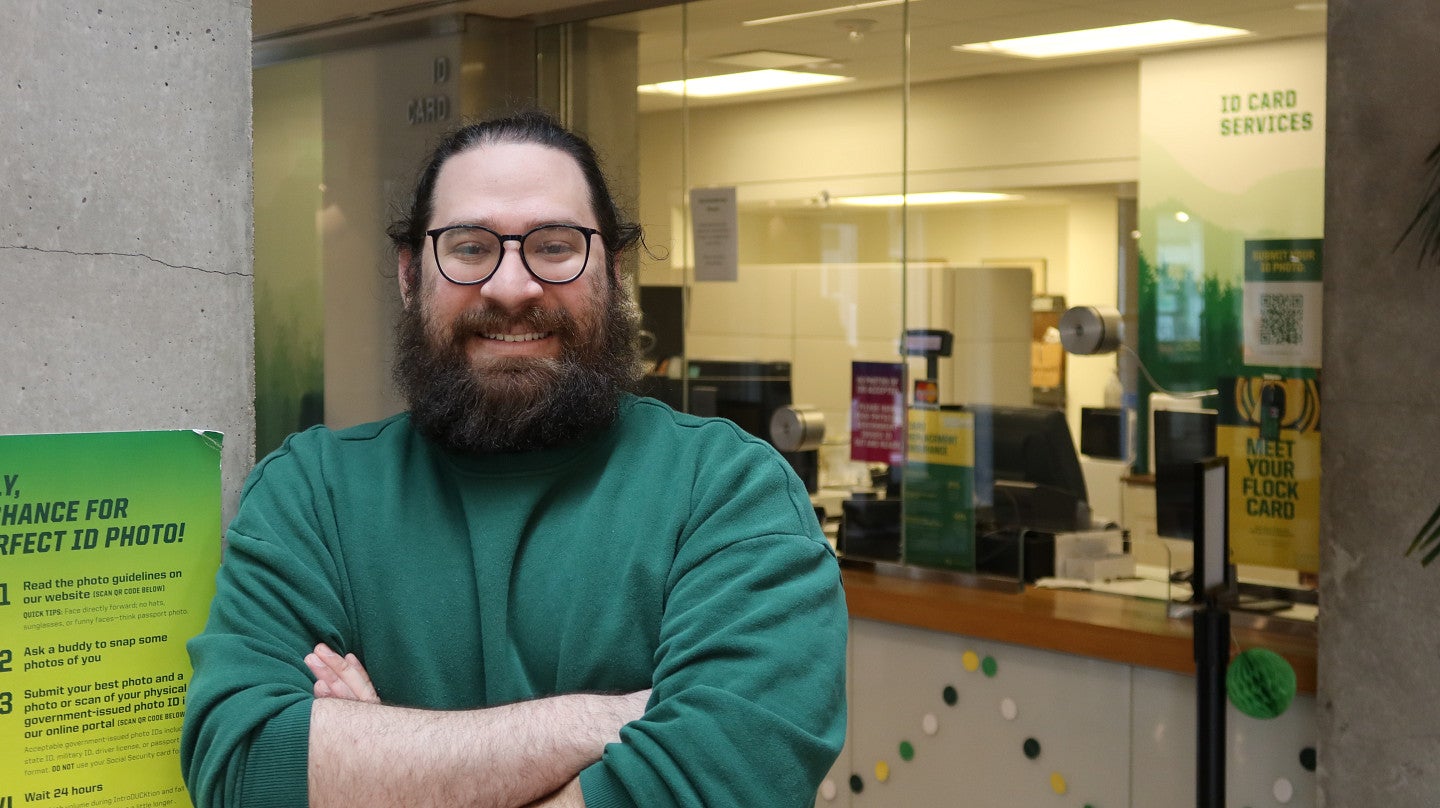
Jon Scott, manager of ID Card Services, said the meals program fills him with hope for students
What: $12 is transferred into eligible students’ Duck Bucks accounts up to twice per term for a quick meal.
Been there, done that: “It means a lot to the students who utilize it,” said Jon Scott, who helps run the program as manager of ID Card Services. “I can understand what they’re going through. I was a college student eating ramen — getting funds for a UO eatery is really nice.”
How to help: Make a donation (under Designation, choose the Students in Crisis Fund).
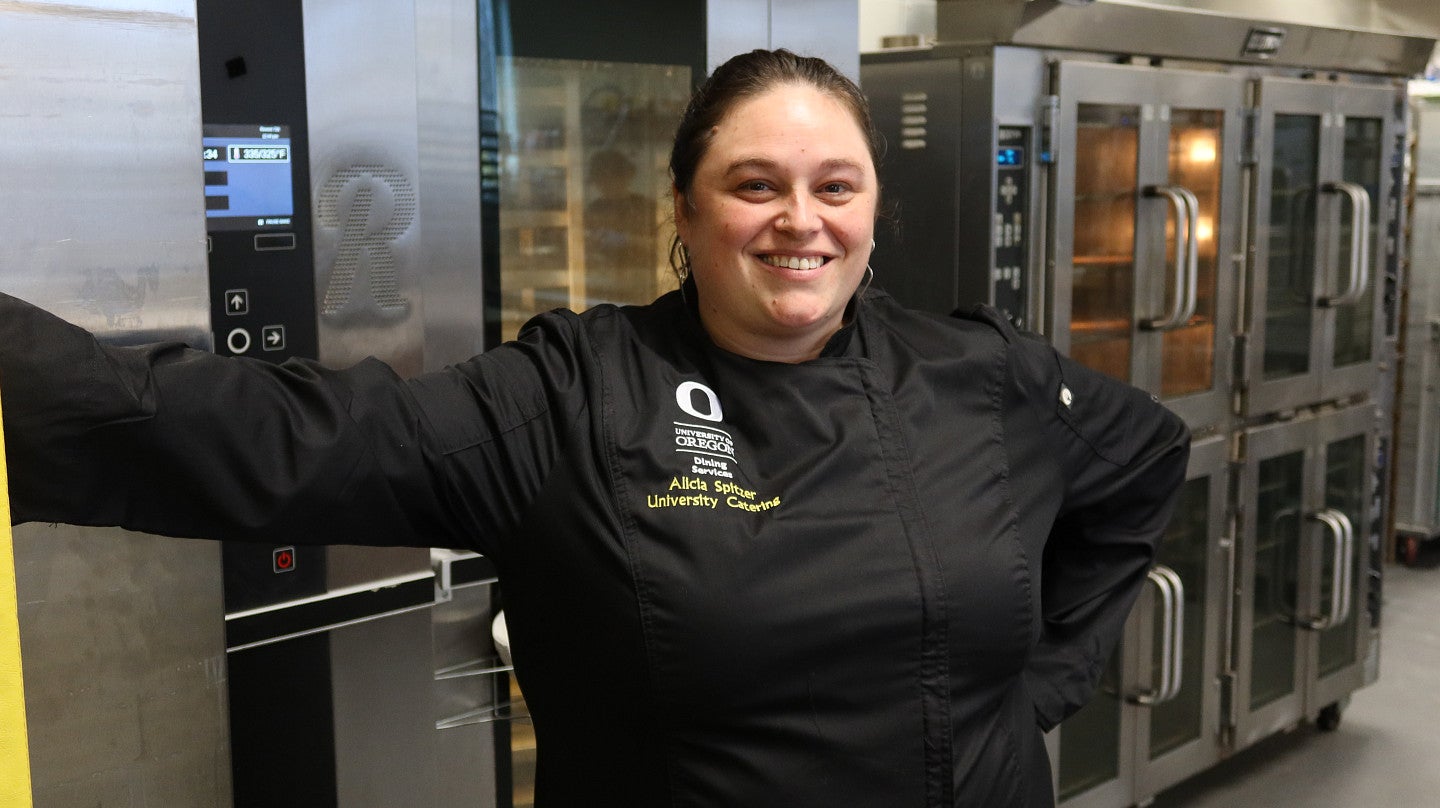
University Catering’s Alicia Spitzer said the free leftovers program hinges on participation by event holders on the Eugene campus
What: Current students are texted when leftover food from UO Catering events is available on the Eugene campus. “This is at no cost to the students,” said Alicia Spitzer, assistant director of dining for Catering and Conference Services. “They just need to show up!”
Catering to students: Spitzer grew up in San Francisco in the meals business — her family runs a catering company — and she gained an appreciation for food insecurity. “Seeing young people nourished through Leftover Textover drives me to continue to try to create that safe and inclusive space for them to have access to food at no cost,” Spitzer said. “I’m honored to be a part of the campus community that provides this option for them.”
How to help: Event planners can work with their sales representatives to add Leftover Textover to their events. “It’s never too late to add this service to your event,” Spitzer said. “Please email catering to send your event’s leftovers to students.”
Getting groceries is a SNAP
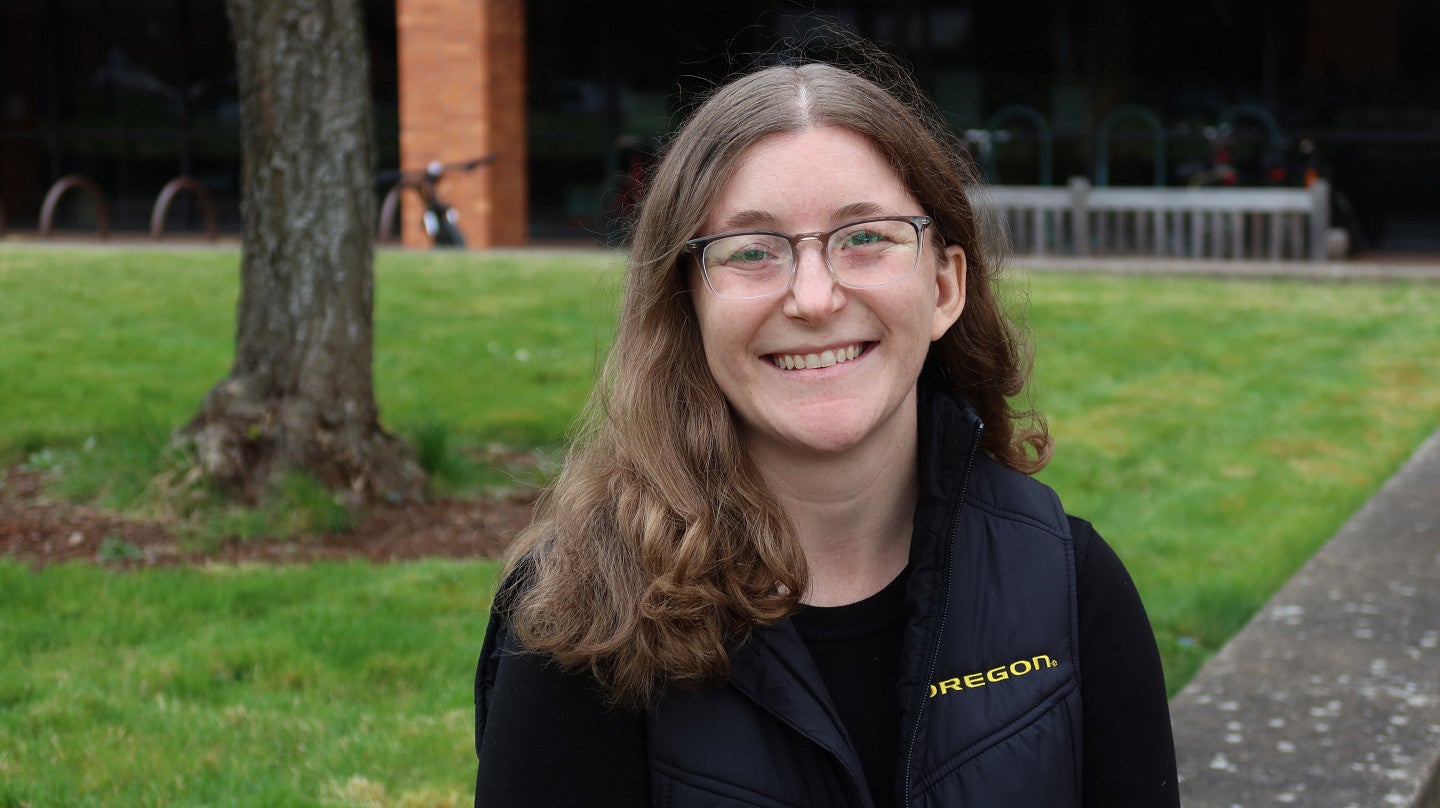
Running the shuttle gives Emma Schwing the positive impact she looks for in a job
What: The Grocery Shuttle is a free ride service, run by The Duck Nest Wellness Center, for students to affordable grocery stores on odd weeks of the term. Transportation Services provides a van through the Motor Pool; the department also runs Duck Rides, a free evening shuttle operating daily from 6 p.m. to midnight that makes grocery store trips.
Groceries and gratitude: “Every time we drop students off, they say, ‘Thank you, I wouldn’t have been able to get groceries this week without this,’” said coordinator Emma Schwing, a senior and peer wellness advocate lead with University Health Services. “Students express gratitude every single time we do this.”
Walk a mile in their shoes: Schwing can understand the transportation conundrum — she didn’t have a car for much of college so for grocery trips she had to rely on friends with wheels, the bus or walking. The grocery shuttle “has brought me a great deal of joy,” she said, “because I’m able to see firsthand that we’re relieving a daily stressor.”
What: Under the Supplemental Nutrition Assistance Program or SNAP, a federal program for people with low income, undergraduates taking at least six credits and graduate students taking at least five can get up to $300 monthly for food and other expenses. Roughly 200 students use the program each year.
Popping myths: “There’s a misconception that undergraduates have to have a job to qualify for SNAP,” said Madeline Hagar, assistant director for food security with the Basic Needs Program. “What matters most is really the monthly gross income.”
Putting stress to rest: Students using SNAP for groceries can more easily budget for other expenses like rent, and some find the benefit eliminates the need for other food support. “Students say to me, ‘The stress goes away,’” Hagar said. “SNAP simplifies food security for them.”
Hope and power: Hagar, who helps set students up with SNAP, said it gives her hope. “It’s empowering for me, too,” she added, “to be a part of their journey.”
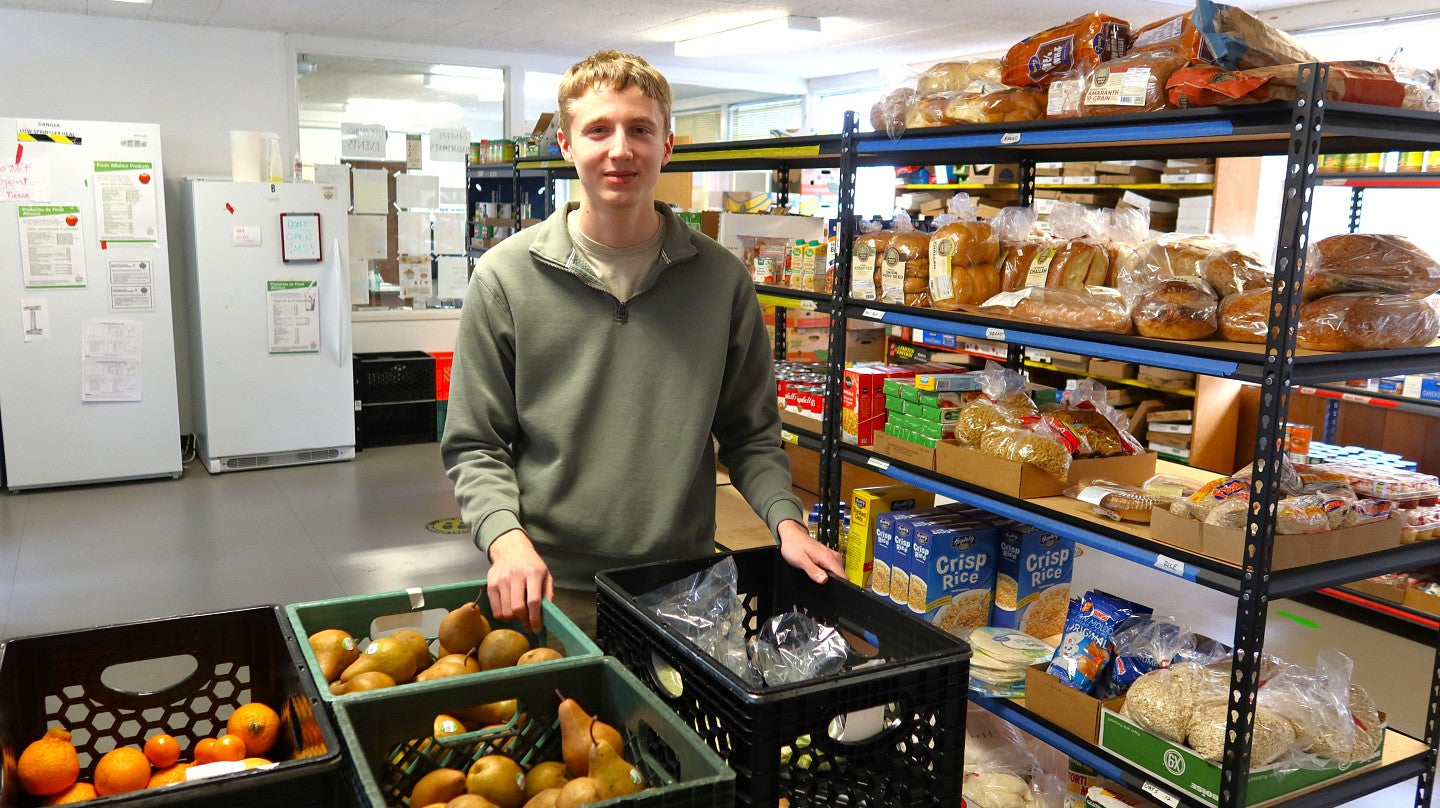
What: The Episcopal Campus Ministries Student Food Pantry near the Eugene campus provides about 5,000 college students in the area with free food each year — fruits and vegetables, soups, bread, rice, pasta, cereal, canned beans, dairy products, frozen meats and more.
Volunteers on why they volunteer: “Some know someone who struggled with food insecurity,” said Johnathan Propes, a second-year student and peer navigator who helps run the pantry through the Basic Needs Program. “Some recognize that food insecurity is a barrier to education. A lot of people who shop at the pantry volunteer to give back.”
How to help: Donate food to Food for Lane County or funds to support the new pantry (in the Search Designation box, type “Feed the Flock”). The pantry will also be highlighted during Ducks Give May 14.
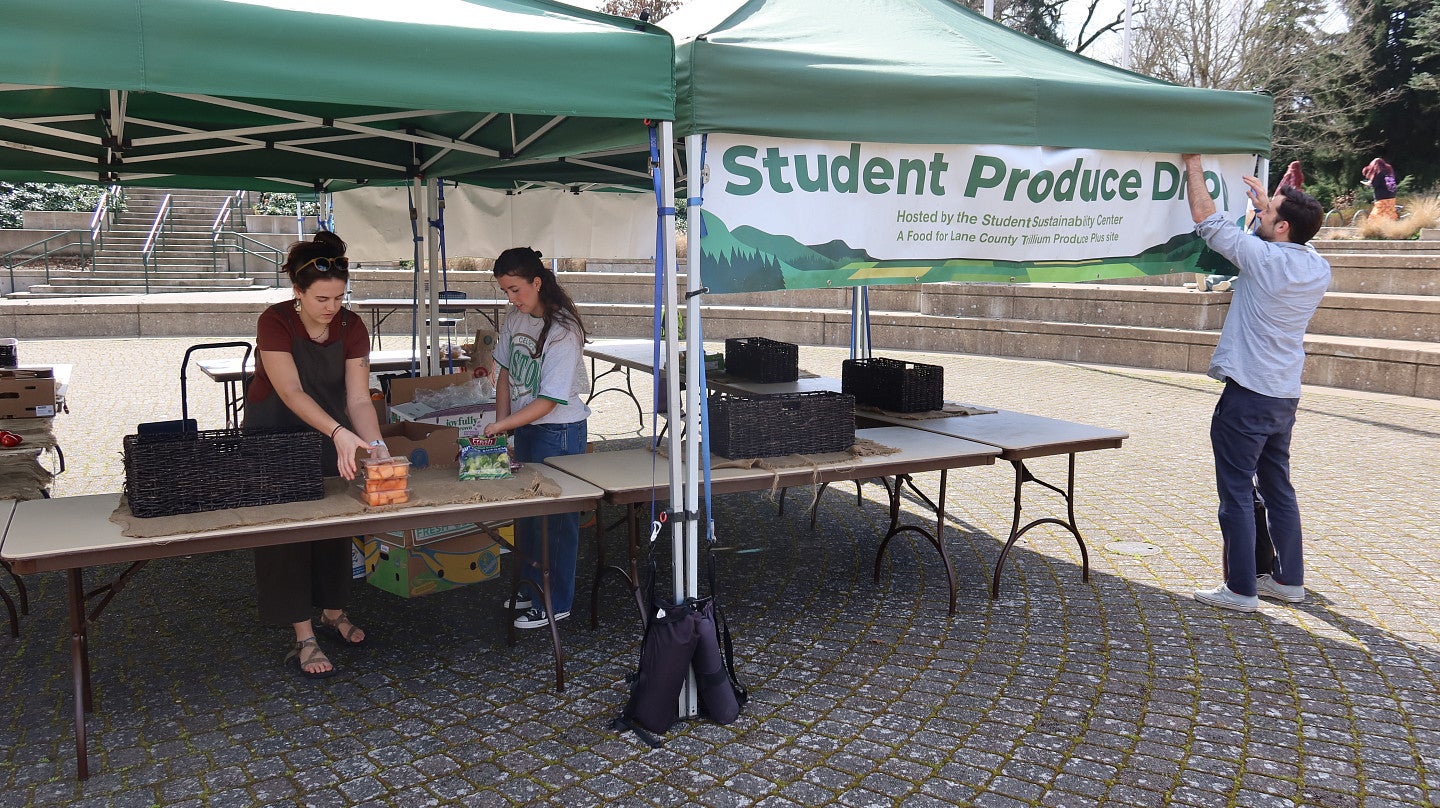
About 300 people are supported weekly through the produce drop
What: The Student Sustainability Center weekly farmer’s stand in the Erb Memorial Union Amphitheater provides eligible students and their families with free produce, bread, water bottles, toilet paper and other supplies.
Fresh, fortified and free: “Eating just ramen and hot dogs — that’s food insecurity,” said Taylor McHolm, program director for the sustainability center. “A lot of students, even if they’re eating enough, have to budget out healthy foods. We hear it a lot that providing fresh, nutritious choices is a game changer.”
Supporting the right to food: McHolm, who earned a doctorate in environmental studies, science and policy at the UO, said it’s “incredibly rewarding” to put his degree to work for students. “I was interested in this position because I wanted to have an autonomous role in crafting a program consistent with my research and teaching and the values I committed to. Environmental justice is a big part of that.”
How to help: Encourage use of the produce drop, McHolm said, and normalize the idea that students eligible for help should take it, regardless of whether they feel less “in need” than someone else.
Putting it all together
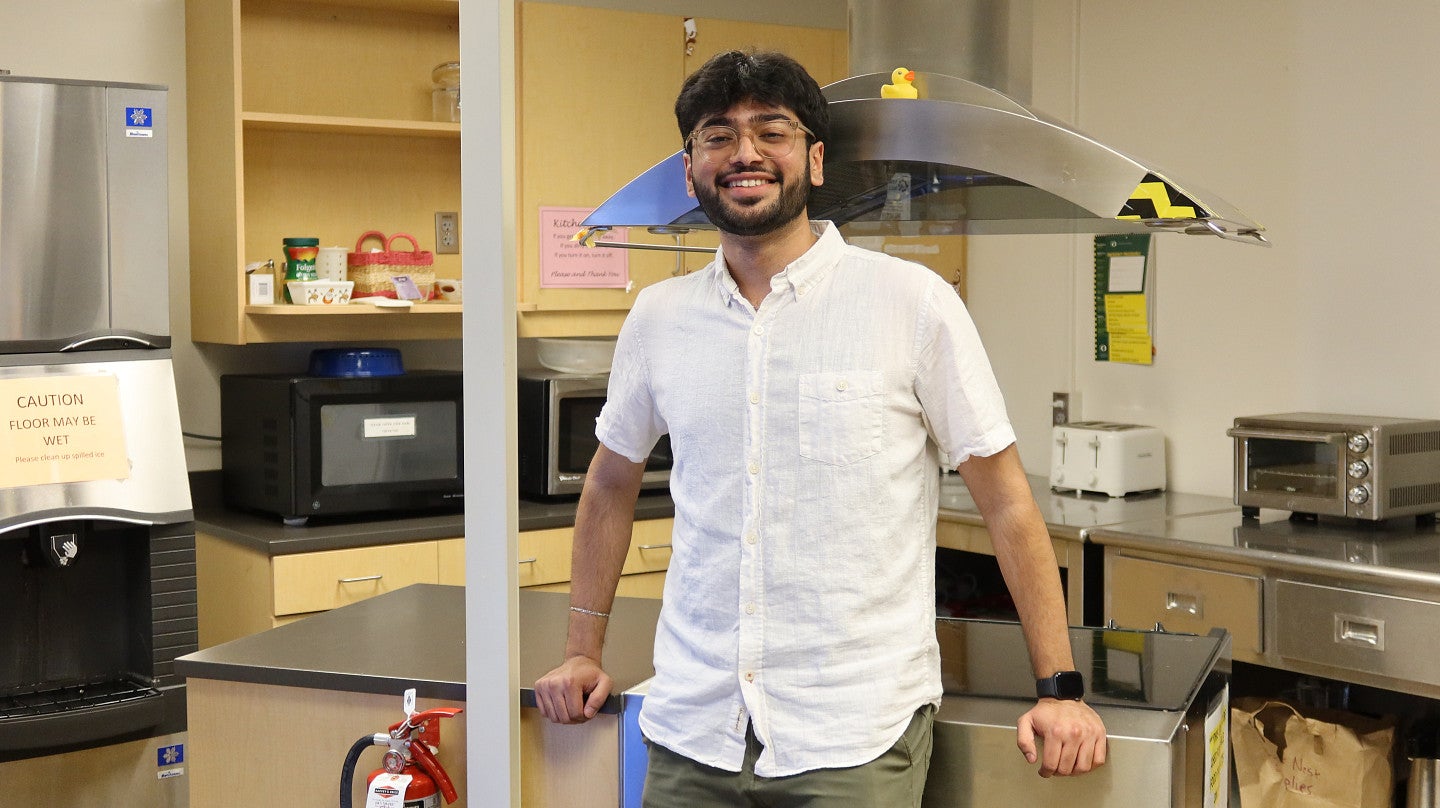
The Duck Nest’s Rishi Sastry savors making savory dishes for the cooking class (Instagram: uo_ducknest)
Recipe for success: “This class is always full,” said senior Rishi Sastry, who helps run it as a member of the Duck Nest physical wellness team. “It’s the experience of having fun learning new recipes, cracking jokes and meeting people you might relate to that brings them back.”
Winging it: Sastry gets a thrill seeing students engage with recipes such as spicy gochujang cauliflower wings, and each other. “When I see the spark — ‘This is not as hard as I thought it was’ — it’s such visceral gratification. I’m grinning from ear to ear.”
How to help: Faculty can add a slide about the Duck Nest into lectures.