

October is National Disability Employment Awareness Month — an annual recognition of the contributions of people with disabilities in the American workforce.
It’s an opportunity to acknowledge the role of Americans with disabilities in supporting the nation’s success. The Department of Labor notes, in fact, that Americans with disabilities have helped shape the country since the days of the founding fathers.
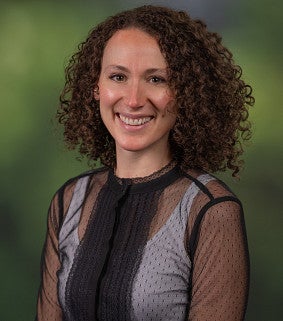
In an interview with Workplace, Celia Marie Nittmann, University of Oregon director of workplace accommodations, discussed what the workforce should know about resources available to employees with disabilities and their colleagues, universal design and other topics concerning disability and employment.
There is a process to receive workplace accommodations.
The UO provides equal employment opportunities and reasonable workplace accommodations to employees with disabilities and those with sincerely held religious beliefs.
Employees are strongly encouraged to contact the Office of Equal Opportunity and Access as soon as they become aware of the need for accommodations. There is also a MyTrack training that describes how to request accommodations and support a general understanding of the interactive process.
Nittmann noted seeking accommodations can place employees in a “vulnerable space” because of stigmas related to disability, but she urged employees to pursue those accommodations, nevertheless.
“We have this really wonderful, empathetic team,” Nittmann said. “We want to hear about barriers you’re experiencing and how we can alleviate them, within reason.”
Get familiar with universal design.
Universal design means designing almost everything — buildings, products, services, digital environments and more — so they can be accessed, understood and used to the greatest extent possible by all people regardless of their age, size, ability or disability.
“We’re overloaded with accommodation requests because we live in a world that does not apply universal design consistently to our physical spaces and digital spaces,” Nittmann said.
Faculty can tap resources to incorporate universal design into their courses.
Another area that applies to all employees is digital accessibility: designing digital content so people with disabilities can use it.
Anyone who creates, edits or distributes digital content is responsible for ensuring that it is accessible to people with disabilities. That includes email, web pages, PDFs and Word documents, streaming videos and media, and more.
A federal law requires websites to meet new standards by April 2027 (the deadline was extended from April of this year). Employees involved in this effort at the UO include Nittmann; Grey Pierce, digital accessibility architect; and Nicole Commissiong, chief civil rights officer and ADA coordinator.
Neurodiversity and mental health conditions are more common than you think.
People with neurodiversity and mental health conditions make the most frequent accommodation requests, Nittmann said.
This includes individuals with different ways of receiving information, retaining information, processing information and communicating this information back. Conditions include autism, attention deficit hyperactivity disorder, depression, anxiety and post-traumatic stress disorder, for example.
“It’s one in four individuals that have a disability, and so many of those disabilities are not obvious,” Nittmann said. “Disability is not always apparent. I have individuals with neurodiversity plead with me to have some type of training to support their colleagues and their supervisor in understanding how their brain processes information, how they process life and how they interact socially.”
The ADA office is continuously looking into resources to address this request and also plans to create trainings, Nittmann said. This training on understanding colleagues with autism is a good place to start.
People with disabilities can face a real balancing act.
One challenge facing employees with disabilities is the need to speak up for what they need to succeed in a job while perhaps being reluctant to disclose a disability or — like many people — uncomfortable asking for help.
There is also a stigma in society that makes disability one of those things you don’t want to disclose because you don’t want to open yourself to judgment, Nittmann said.
“We live in this world of comparison — everyone’s comparing one person to another. There’s a saying: ‘comparison is the thief of joy,’” Nittmann said. “We’re constantly comparing each other’s challenges or perceived ‘special treatments’ and it creates tension.
“If we were more supportive of one another and we trusted that we leaned into these support resources only when we needed them, we wouldn’t question, ‘Why does Bob get three days of remote work versus Susie?’ I’d just encourage everybody to meet employees with disabilities with enthusiasm to support and create equity using universal design.”
The ADA team has expanded support to meet the needs.
There is still much work to be done at the UO to meet the needs of employees with disabilities, Nittmann said.
But one step forward, she added, was the recent hire of Kari DeVall, assistant director of workplace accommodations, to support the consistent increase of requests and improve the processing time of these requests.
“She’s doing a fantastic job,” Nittmann said. “We’re slowly building our team and that support is being felt more quickly across the university, and that is positive.”
—Matt Cooper, University Communications