

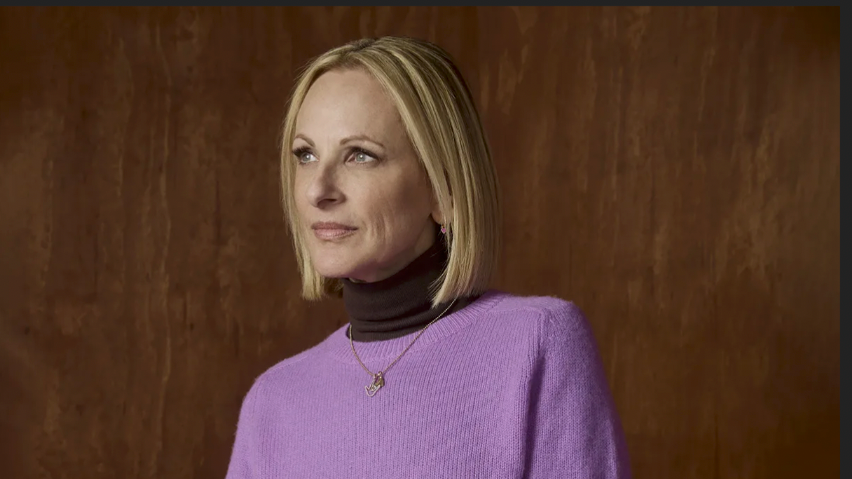
On one wrist, she wears a tattoo that reads “perseverance.” On the other, “warrior.”
This is how Deaf actor Marlee Matlin defines herself. Strong. Capable. Relentlessly pursuing her goals as a mother, entertainer and activist. And never, ever bound by what others say she can be, what she can or can’t do.
Matlin — speaker for the 2026 commencement at the University of Oregon — has overcome considerable personal and professional adversity to win Hollywood’s highest awards and change the world for Deaf and hearing people alike. She’s done it by listening to herself.
“Never let people define who you are,” said Matlin, whose youngest child, Isabelle, is in the graduating class. “Why let others dictate what you can and can’t do?”
Matlin received worldwide critical acclaim for her film debut in 1986’s “Children of a Lesser God,” becoming, at 21, the youngest recipient of the best actress Oscar and the first Deaf actor to win the award. She has an Emmy, she’s starred in “Seinfeld,” “The West Wing,” “The L Word” and “Law and Order: Special Victims Unit” and she costarred in “CODA,” which made history in using Deaf actors to play Deaf characters and swept every category for which it was nominated at the 2022 Academy Awards, including best picture.
At the same time, Matlin has advocated fiercely for Deaf people inside and outside of show business.
She helped champion the student-led protest at Gallaudet University that culminated with the 1988 appointment of its first Deaf president, a turning point in the fight for Deaf rights. She testified twice before Congress in the 1990s to support legislation that made closed captions a requirement for television. During the Academy Awards last month, she got a shout out from Lynette Howell Taylor, president of the Academy of Motion Picture Arts and Sciences, for an honorary Oscar that Matlin received in 2025 on behalf of those who have developed and supported open and closed captioning technology in film.
But it’s never been easy. Matlin — who conducted this interview in American Sign Language through Jack Jason, her longtime interpreter and friend — grew up at a time when Deaf people were ostracized, ignored or expected to learn to speak, regardless of their capacity for it or personal preference.
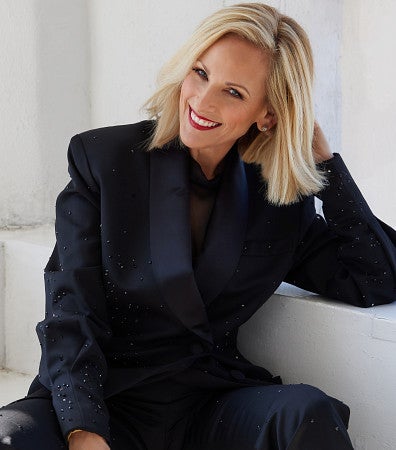
Her family was loving but communication was difficult, leaving her frustrated, isolated and alone. She endured difficult and damaging relationships and once struggled with substance abuse, checking herself into the Betty Ford Center in 1987 and beginning a proud life of sobriety that continues to this day.
Matlin credits — of all people — “The Fonz” for the mentorship that guided her first to stability, and then to Hollywood success.
Actor Henry Winkler, who for 10 years in the 1970s and ’80s played the black leather-jacketed embodiment of cool in “Happy Days,” took Matlin in after rehab and, with his wife, Stacey Weitzman, gave her a home in California for two years. Winkler had encouraged Matlin to pursue her acting dreams since she reached out to him as a 12-year-old fan, and she believes his guidance on success is as relevant for college graduates as it is for Oscar winners.
“He defines success as just achieving your own personal goal — everyone has their own path,” Matlin said. “It’s important to have somebody to look up to, and for me, it was Henry Winkler. People hear it all the time, but I really have to stress the importance of having a mentor.”
With the support of Winkler and others, Matlin has constantly fought for herself in Hollywood, “hustling” to find roles, she said, while battling a stigma against casting and writing for actors with disabilities. Deaf actors were chosen for “CODA” only after she made her participation in the film contingent upon it.
“I said if they hire hearing [actors] to play Deaf, I was out,” Matlin said, in her 2025 documentary, “Marlee Matlin: Not Alone Anymore.” “That was the first time I ever said that in my career. But I knew it was time to say something.”
Matlin is encouraged by the breakthroughs of the next generation of Deaf performers, including Lauren Ridloff (“The Walking Dead”), Russell Harvard (“There Will Be Blood”) and Daniel Durant, a costar on “CODA.” But, she added, there is still a lot of hard work to be done to create more opportunities in the entertainment industry for actors with disabilities.
At the same time she’s girding for more battles against the status quo, Matlin is enjoying the relative tranquility of being a wife and mother of four who recently celebrated the birth of her first grandchild.
Her daughter Isabelle’s experience at the UO has contributed to Matlin’s peace of mind. The journalism major is intrigued by film and TV and Matlin speculated that working for a production company could be a good fit at some point.
But even more than career preparation, the university’s air of friendliness and camaraderie assured Matlin her daughter has been in, she said, “the right place.”
“People are always so pleasant when you’re there,” said Matlin, who lives in Southern California. “I always feel good when I go there. Isabelle always asks me, ‘Why do you have to talk to people while you’re here?’ And I say, ‘Because they’re so welcoming, you know?’
“She just looks at me,” Matlin added, laughing.
That sense of acceptance left Matlin with a warm memory from a football game against USC in 2025. Sitting in a suite with President Karl Scholz and others, Matlin was thrilled by a dazzling Ducks play early in the game. She was so happy she wanted to leap out of her seat — but she was sitting with the president, shouldn’t she remain cool and composed?
“I just turned around, and he was standing up cheering, and so I thought, ‘OK, if he’s doing it, I can do it — I’m just gonna be me,’” Matlin said. “And so I stood up, and we were all high-fiving, everybody was high-fiving everybody.
“That’s what’s great about the University of Oregon,” she added. “Everybody’s just very genuine. Very, very real.”
—Matt Cooper, University Communications