

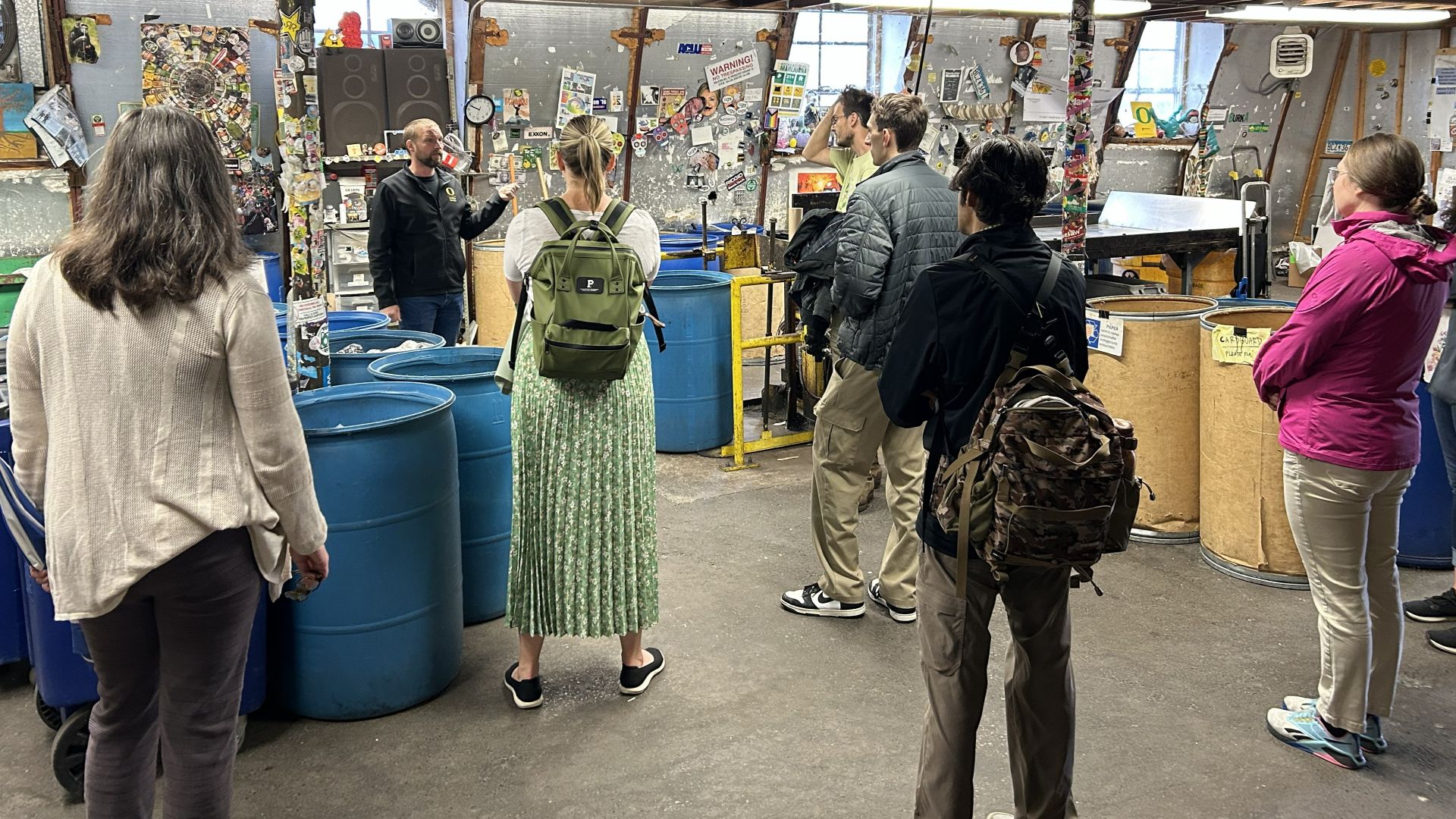
Can bird-watching help you become a better coworker? Will learning about the challenges of Chinese immigrants in Oregon help you to better empathize with your supervisor?
There are overarching initiatives at the University of Oregon to increase understanding and representation, such as the programs of the Division of Equity and Inclusion. Many departments and units are also tackling the work themselves. If the UO is like a city, then these grassroots committees are the neighborhood block parties. And who doesn’t want to get along with the people in their neighborhood?
The more people you meet at the university, the more connected you feel. You can call someone for a collaboration because you know what they do. You see another friendly face as you walk down East 13th Avenue. Two UO departments are helping their staff make these connections, which in turn benefit the wider university community.
Everyday Inclusion
The popularity of the 2018 Implicit Bias Awareness Month initiative led the Office of the Senior Vice President for Finance and Administration to create Everyday Inclusion, a month of diversity awareness and engagement activities. The goal is to do the little things that add up to big connections.
Cochairs Debbie Sharp and Deborah Butler lead a committee of nearly 20 who represent the office’s eight divisions. Each year they brainstorm a theme and event ideas, which are voted on. Some members host an event or recruit an outside expert. A popular training was an online presentation on neurodiversity.
This year’s theme is “Duck Vision” and a sticker design contest was held. Some people chose doing art as their way of participating and didn’t attend other events, and that is fine, Sharp said — everyone engages with inclusion in the way that works for them. Sharp sends weekly emails with readings, reflections and outings including bird tours, an interactive workshop on flourishing, yoga, Quack the Quiz, a tour of the “Roots and Resilience—Chinese American Heritage in Oregon” at the Museum of Natural and Cultural History, and a presentation facilitated by Butler on hobbies that benefit careers.
Employees are intrigued about areas that are unrelated to their jobs, Sharp said. To accommodate demand, extra tours were added to the power plant, greenhouse and zebrafish lab on the Eugene campus.
One who attended many of the activities was Anupam Katkar, enterprise IT project manager in the Information Services Project and Portfolio Management Office. Katkar, current committee member, wildlife watcher and talented photographer, said during the greenhouse tour people who didn’t know each other started discussing which plants they had in their yards and more connections grew.
“People like seeing what the university does,” Katkar said. “It gives them a sense of pride or belonging. DEI gets a bad rap where people think it only applies to certain groups. It’s about finding common ground to connect on.”
Monthly learning sessions
The University Advancement Diversity Committee also offers opportunities to grow professionally. The leaders of the group are Deshna Charron from the UO Alumni Association, Tatia Benkonvich from development and Celeste Christie from annual philanthropy. They work alongside 10 others with input from all staff to plan and develop monthly learning sessions.
Advancement requires staff to attend five diversity, equity and inclusion development opportunities annually and the sessions count toward that goal.
Committee members have led sessions on mental health and wellness and transgender allyship. The monthly gatherings include hands-on activities and cultural celebrations. They often seek faculty and staff to speak. A presentation on the Yasui family history and heritage at the UO was given in May for Asian American Pacific Islander History Month by Kevin Hatfield, assistant vice provost for undergraduate research and distinguished scholarships; Ben Murphy, Corrigan Solari university archivist and historian; and Emily Moore, UO libraries and outreach archivist.
One of the most powerful events was a Women’s History Month panel in March where colleagues shared their experiences as women in the workplace. An emphasis on privacy created a meaningful experience for the women and attendees especially when anonymous comments were read. Women felt seen and heard and less alone in their struggles and oppression, according to session leader Charron. Feedback was heartfelt: “I was on the edge of my seat and tearing up the whole time.” “I learned so much from all of you and am grateful that I got to serve on a panel alongside so many amazing, beautiful and empowering women.”
After most learning sessions, resources that support the topic — articles, websites, podcasts, videos — are shared. The committee also broadcasts university-wide events and related initiatives on a Teams channel.
Anyone can “be the change.” It takes commitment and creativity, but the outcome benefits everyone’s UO experience.
Is your unit holding events and trainings about inclusion? Send an email to workplace@uoregon.edu for consideration in future articles.
—Jennifer Archer, University Communications
—Top photo: Everyday Inclusion participants tour the Zero Waste Quonset
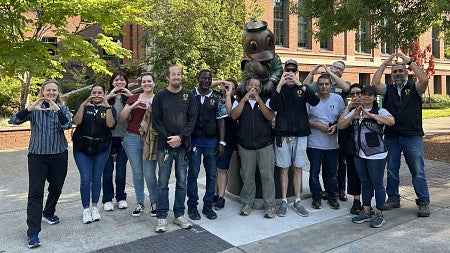
—Second photo: Day shift custodians stop for a photo with the Thinker Duck during a tour of the Eugene campus